

No, CBD doesn't get you "high," and here's why
CBD is a hot topic—it sparks curiosity, offers benefits, and sometimes raises concerns. Many people still wonder if it gets you high. Our short answer: no. But to truly understand why CBD doesn’t get you “high, ” you need to dive into the science of cannabis. We’ll explain it simply.
Things to remember
- CBD is not a psychoactive substance and does not induce a euphoric state.
- The "high" is caused by THC, not by CBD.
- CBD affects your nervous system differently and promotes balance rather than disruption.
CBD vs. THC: Two Compounds, Two Completely Different Effects
THC, the molecule responsible for the “high”
When we talk about the "high," we're actually referring to THC, or tetrahydrocannabinol. It is THC that causes euphoria, altered perceptions, a distorted sense of time, and sometimes that famous floating sensation associated with cannabis.
This is because THC acts directly on the brain’s CB1 receptors, which are part of the endocannabinoid system. By binding strongly to these receptors, it triggers a chain reaction that alters neural activity. This is why users experience a change in mood, heightened sensory perception, and sometimes even a feeling of disorientation.
It is this specific mechanism that is associated with the “high”—not cannabis in general, not hemp in general, but THC specifically.
CBD interacts with the body in a more subtle way
CBD, or cannabidiol, is in a league of its own. Its chemical structure is similar to that of THC, but its biological effects are completely different.
Unlike THC, CBD does not bind directly to CB1 receptors. It acts indirectly: it modulates, regulates, and influences reactions. It does not trigger a euphoric response. It does not alter perception. It does not cause a "high."
On the contrary, some studies even suggest that CBD may mitigate certain effects of THC when the two are consumed together. In other words, it tends to promote balance rather than intensify effects.
Here we have two opposing effects: THC has a strong stimulating effect, while CBD has a gentle regulating effect.
Why doesn't CBD have any psychoactive effects?
A lack of strong affinity for brain receptors
To experience a “high,” there needs to be intense activation of the CB1 receptors located in the brain. CBD does not have this affinity. It does not bind to them in any significant way and therefore does not activate the reward circuit associated with euphoria.
Thus, without direct activation of CB1 receptors, there is no impairment of cognitive function, no sensory distortion, and therefore no psychotropic high.
A regulating effect rather than a stimulating one
The endocannabinoid system acts as an internal conductor. It helps regulate sleep, mood, pain, and appetite. CBD supports this system without interfering with it.
That is why many people describe CBD as “subtle.” It doesn’t alter your state of mind; on the contrary, it calms it.
No change in perception or loss of control
A “high” usually involves altered perception (brighter colors, amplified sounds, a sensation of time slowing down). With CBD, none of that happens.
You remain alert, focused, and fully functional. You can work, drive (in accordance with local laws), or carry on a normal conversation, for example. There is no loss of touch with reality.
Why There Is Still Confusion About CBD
The conflation with recreational cannabis
CBD comes from hemp, which belongs to the same botanical family as THC-rich cannabis. For many people, this similarity is enough to cause confusion.
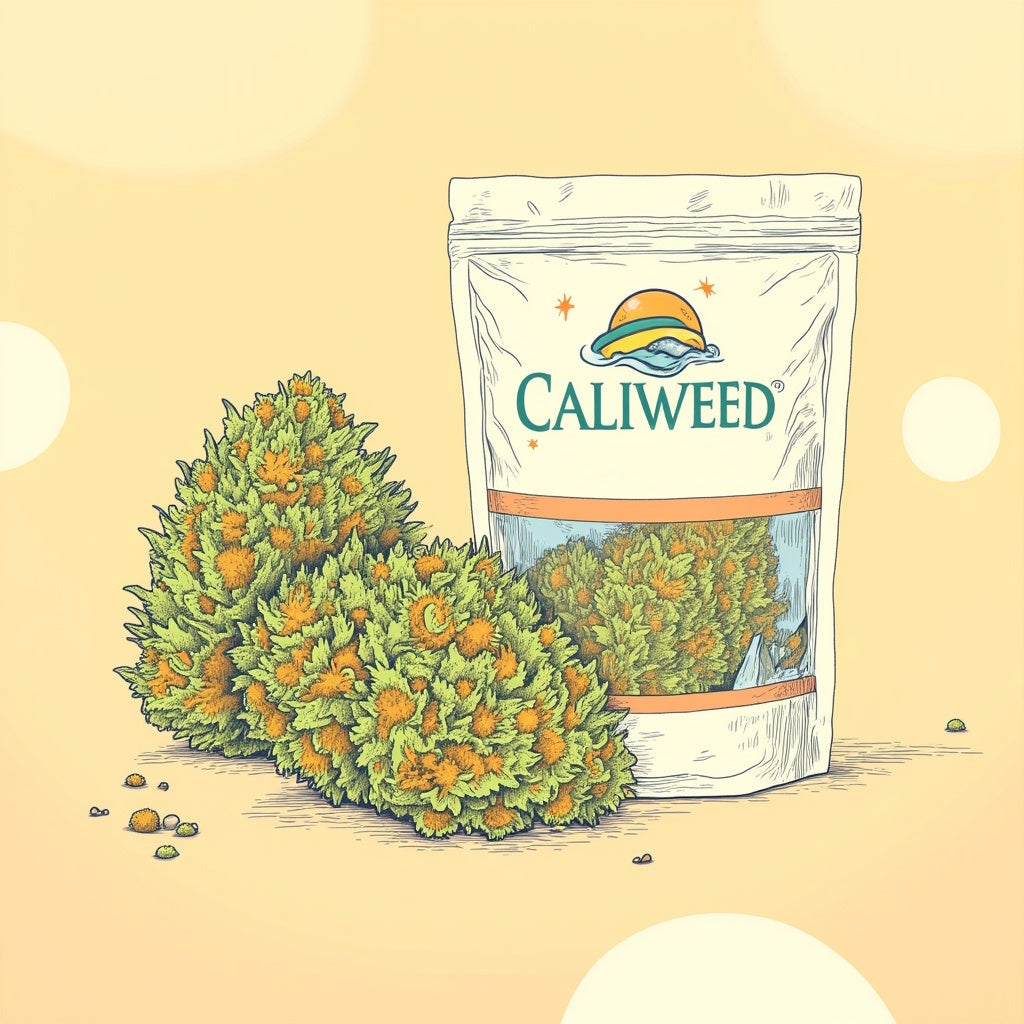
Visually, a CBD flower may look like a THC-rich flower. The smell may be similar. The terpenes are sometimes similar, but the cannabinoid composition is different. And it is this composition that determines the effects.
A legal CBD flower contains a very small amount of THC, not enough to cause a high.
The word “cannabis” still triggers stereotypes
In the popular imagination, cannabis is still synonymous with getting high. This association has been deeply ingrained for decades, yet the plant is more complex than that.
Industrial hemp is grown specifically to contain very little THC. The CBD extracted from these varieties does not have the psychoactive effects of recreational cannabis.
Expectations sometimes influence how we feel
Some people report feeling a mild “high” after using CBD. In most cases, this is either a placebo effect or a deep sense of relaxation that they perceive as unusual.
When the body truly relaxes after a period of intense stress, the sensation may feel unfamiliar, but relaxation does not mean euphoria. Nor does relaxation imply a change in mental state.
Just to clarify one last time:
- CBD does not cause a psychotropic high;
- It does not alter sensory perception;
- It does not cause addiction associated with a "high."
What it can do, however, is support your inner balance. At Cali Weed, we like to keep things clear. CBD isn’t the high of the ’70s. It’s the chill, clear-headed, controlled version of hemp: you stay in control. You remain yourself. CBD doesn’t take you somewhere else. It simply helps you feel better right where you are.